

Back to Oral Health

Post Treatment Advice

Key Takeaways

  • Follow your dentist's specific instructions carefully after any procedure.
  • Avoid hot drinks and hard foods until numbness wears off to prevent injury.
  • For extractions, bite on the provided gauze to control bleeding and help a clot form.
  • Contact your dentist if you experience severe pain, swelling, or bleeding that doesn't stop.

Filling

  • Don't eat or drink anything for 30 min after Tooth filling

    Don't eat or drink anything for 30 min after Tooth filling

    After the filling is done, it will take a while for the filling to harden Do not to eat or drink anything for 30 min after the filling is done.

  • Time to adjust

    Time to adjust

    Sometimes it takes 1-2 weeks for the bite to adjust.
  • Tooth Sensitivity

    Tooth Sensitivity

    Sometimes you may experience some sensitivity for a while. If the sensitivity persists or gets worse, get it checked by your dentist.
  • Experience pain

    Experience pain

    Sometimes, if your filling is very deep, you may experience pain that is getting worse or disturbs sleep at night and may need further investigation or treatment. See you dentist promptly for further advice.
Extraction

tooth Extraction

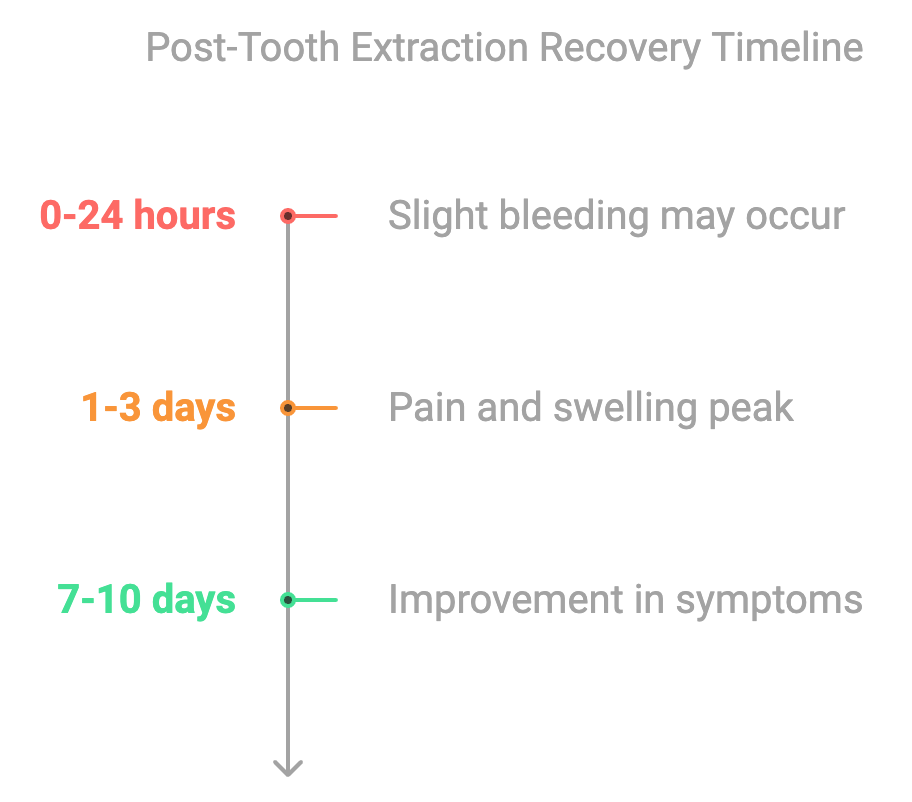
Soon after tooth extraction:

  • You may notice slight bleeding for a few hours to a day.
  • Might experience pain and difficulty opening your mouth and swelling and bruising as the numbness wears off. It should improve with time (7-10 days).
  • While it is still numb, be careful not to eat or drink hot foods to avoid burning your mouth, tongue or lips
  • Your dentist will have advised you about painkillers and if you need to take time off work or school
  • Bleeding & Swelling

    Bleeding & Swelling

    • Apply pressure by biting down on the guaze over the area where the tooth was removed for 15-20 min.
    • Repeat if needed
    • If the bleeding doesn’t stop after a day or gets worse, contact the practice.
  • Pain and Antibiotics:

    Pain and Antibiotics:

    • Take painkillers as advised by your dentist to help with pain.
    • If your dentist prescribed any antibiotics, complete the course of antibiotics.
    • (! Stop taking the prescribed medicine in case of tummy ache, vomiting or rashes or difficulty swallowing.) You need to call the ambulance in case of severe allergic reaction or breathing difficulty.
  • Exercise

    Exercise

    Avoid heavy lifting or strenuous exercise for the next 24 hours.
  • Salt water rinses

    Salt water rinses

    Gently rinse your mouth 3-4 times a day and after any meals with warm salt water (about 1tsp salt in a glass of warm water).

  • Avoid Smoking

    Avoid Smoking

    Avoid smoking for the next few days.

  • Diet

    Diet

    Avoid hot foods and drinks for the next 24 hours. Eat soft food until you can chew normally.

  • Brush

    Brush

    Brush gently for next few days taking care not to dislodge the blood clot in the tooth socket. This stops the beeding and prevents from any infection or dry socket (which can be very painful).
  • Sleep

    Sleep

    Sleep propped up with an extra pillow. This can help reduce the swelling and avoid putting pressure on the healing socket.
help

Contact your dentist if:

  • - Pain or swelling worsens.
  • - You get fever
  • - Allergic reaction to any painkillers or antibiotics prescribed
  • - Bleeding doesn’t stop or gets worse
  • - Any tingling, numbness or pain in the tongue, lip and chin area following removal of lower back teeth
  • - Pain or blocked nose on one side or feeling of air or fluid passing from the mouth to nose when drinking.